
Guides
Acoustic plasterboard vs mass-loaded vinyl — a fitter's honest take
Both add mass. Both claim to soundproof. So when does mass-loaded vinyl actually beat double acoustic plasterboard? Here's the no-spin answer from a working installer.
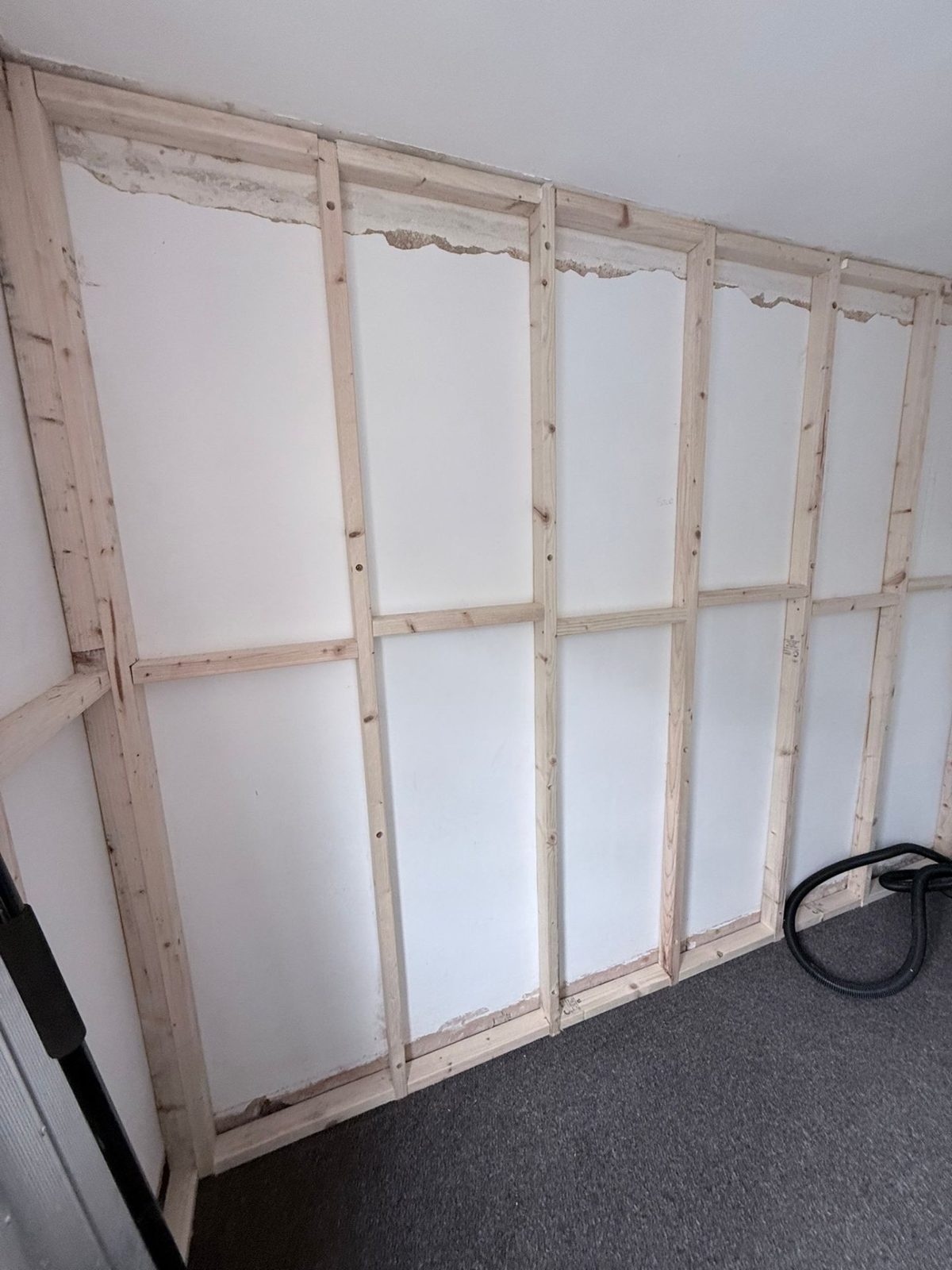
Every soundproofing supplier sells both. Every YouTube video swears by a different one. Here's how we actually decide between acoustic plasterboard and mass-loaded vinyl (MLV) on a Leeds or Bradford soundproofing job.
What each material actually does
Both add mass — and mass blocks airborne sound. The difference is density per millimetre. Acoustic plasterboard is 11–12 kg/m² per sheet at 15 mm thick. MLV is 5 kg/m² per millimetre but only a few mm thick. So sheet for sheet, double acoustic plasterboard delivers more mass than a layer of MLV.
When we use acoustic plasterboard
- Almost all wall and ceiling builds — the default for 95% of our jobs
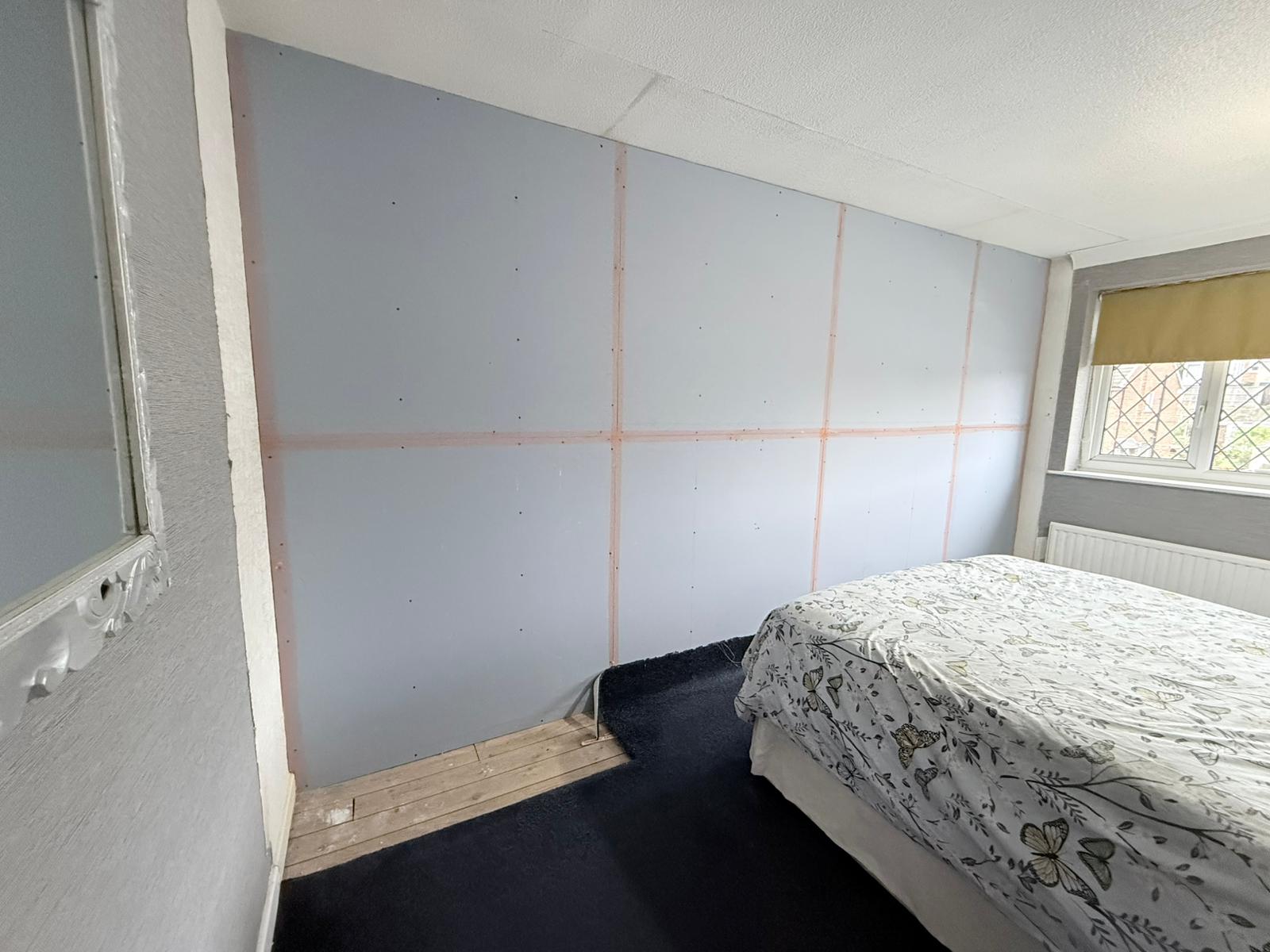
- When you've got the depth for a 70–100 mm independent build-up
- When the finished surface needs to be paint-ready plaster
When MLV earns its place
- Adding a damping layer between two plasterboard sheets (mass + limp damping)
- Wrapping pipes and ductwork where you can't get a board in
- Floor build-ups under thin engineered floor finishes
- Curtain or curtain-track sound barriers in studios and home cinemas
The honest verdict
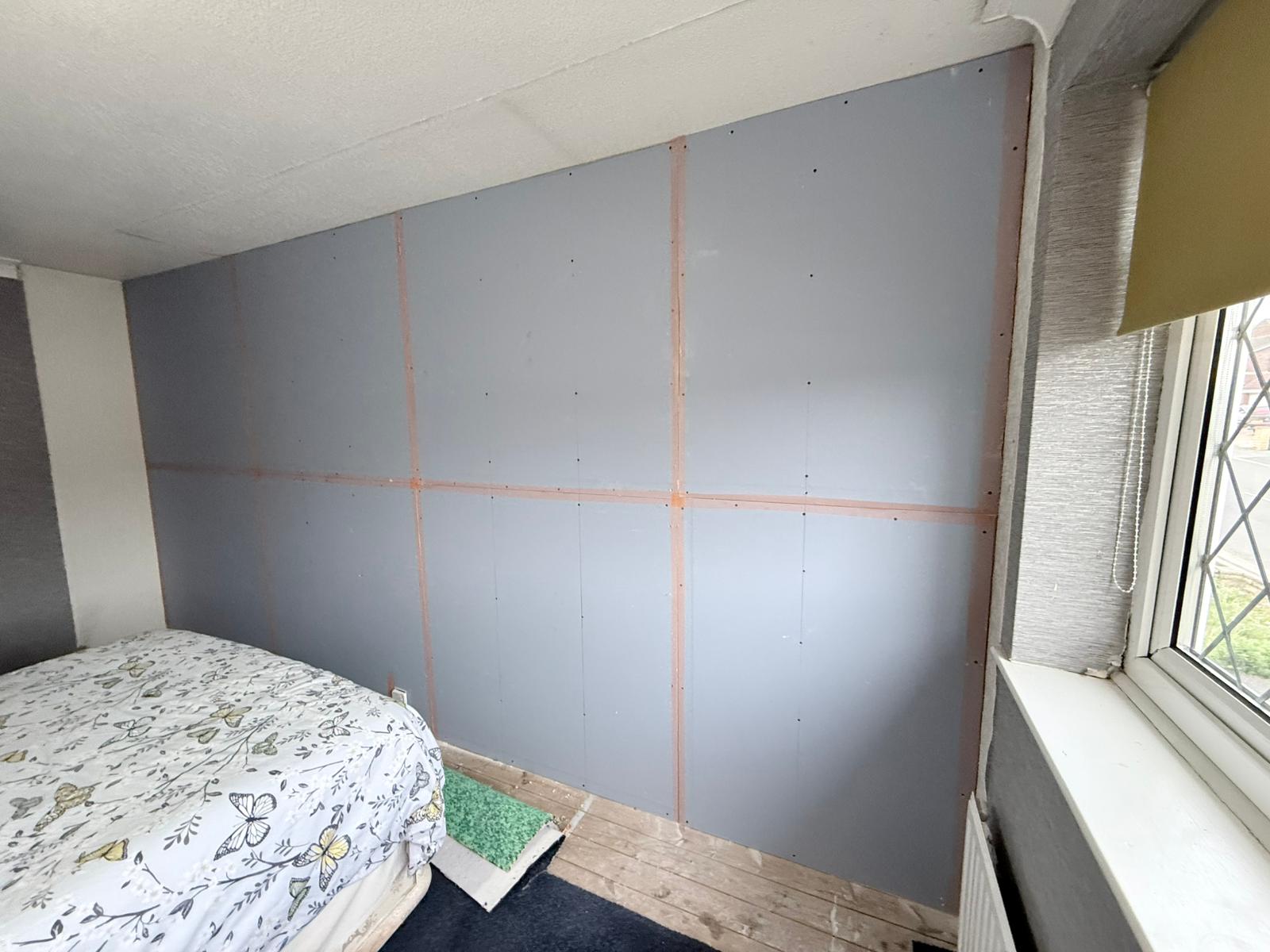
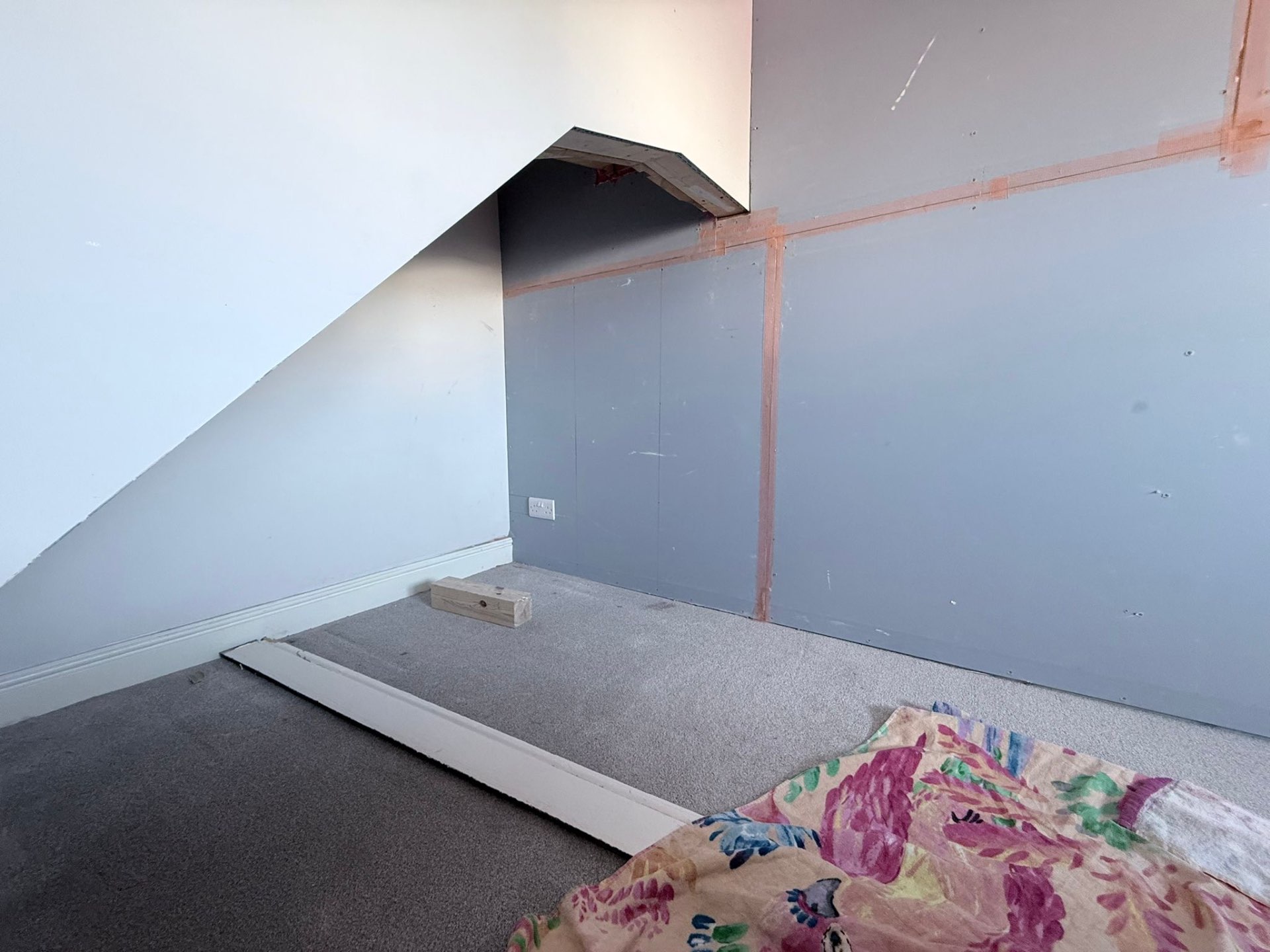
For domestic soundproofing in a typical West Yorkshire home, double acoustic plasterboard with a properly isolated frame does 95% of the heavy lifting. MLV is a useful specialist material in specific situations, not a magic upgrade. If a supplier is pushing MLV as the answer to your party wall problem, get a second quote.
Next steps
Ready for a no-pressure technical survey?
We'll measure up, talk you through the options, and email a fully itemised quote — usually within 48 hours.