
Soundproofing
Noisy neighbours through a party wall — the honest fix for Yorkshire terraces
Why party walls in Leeds, Wakefield and Bradford terraces leak so much sound — and the independent-wall system that actually fixes it. Written by a working installer.
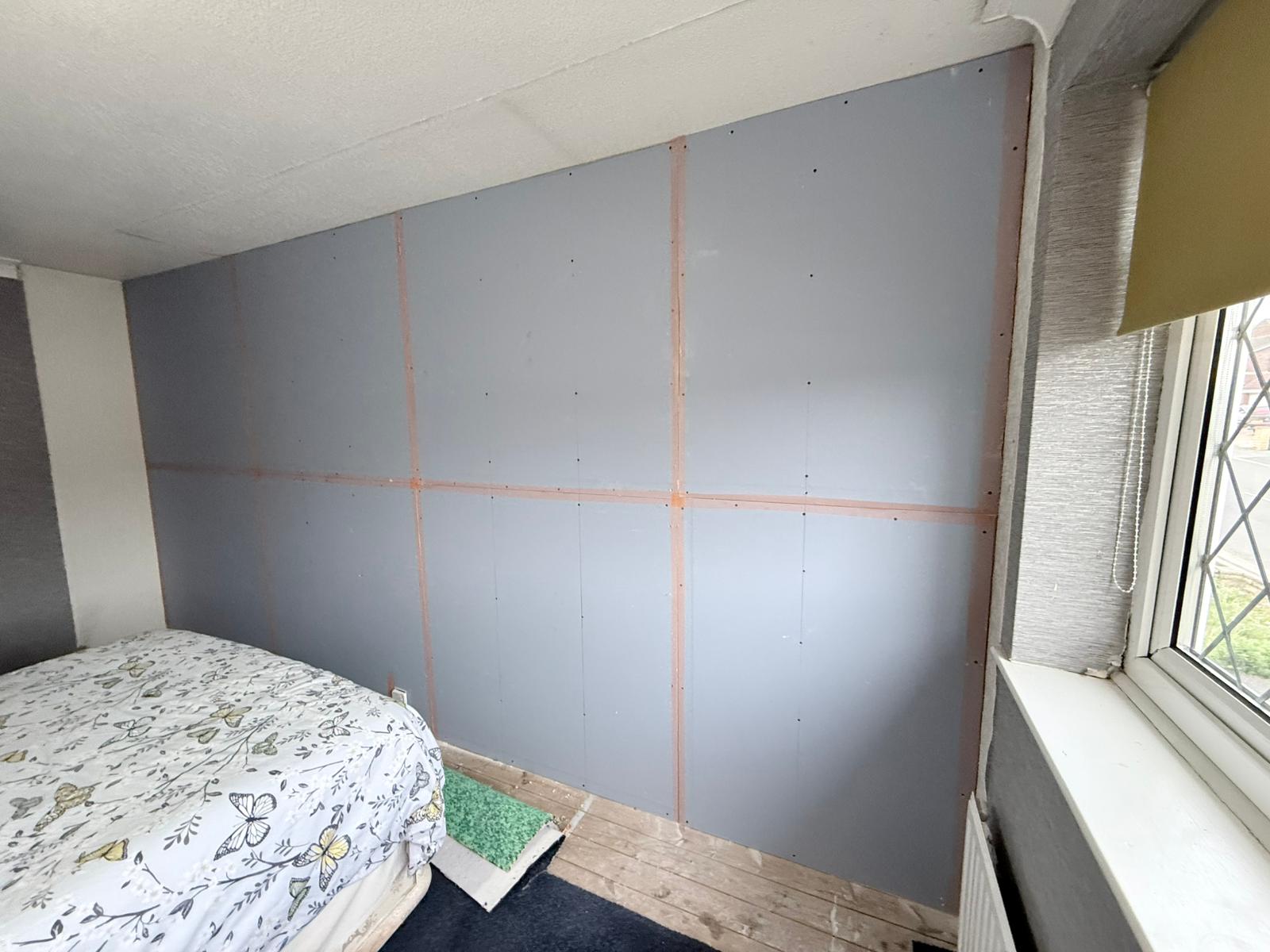
We get a call about a noisy neighbour at least twice a week — usually from a back-to-back or through-terrace in Leeds, Wakefield or Bradford. Here's why those party walls leak so much sound, and what actually works to fix it.
Why old Yorkshire party walls are so noisy
Most pre-war terraces across West Yorkshire share a single-skin brick party wall — sometimes just 4½ inches thick — with thin lath-and-plaster or dot-and-dab plasterboard either side. That build-up has almost no mass and zero isolation. Voices, TV bass and footsteps couple straight into the brick and re-radiate into your room.
Why adding plasterboard doesn't work on its own
The most common DIY attempt is to screw another sheet of plasterboard direct to the existing wall. It barely changes anything, because the new board is still rigidly coupled to the noisy structure. You've added a tiny bit of mass and zero decoupling. Sound just travels through both layers like they're one.
The system that actually fixes it
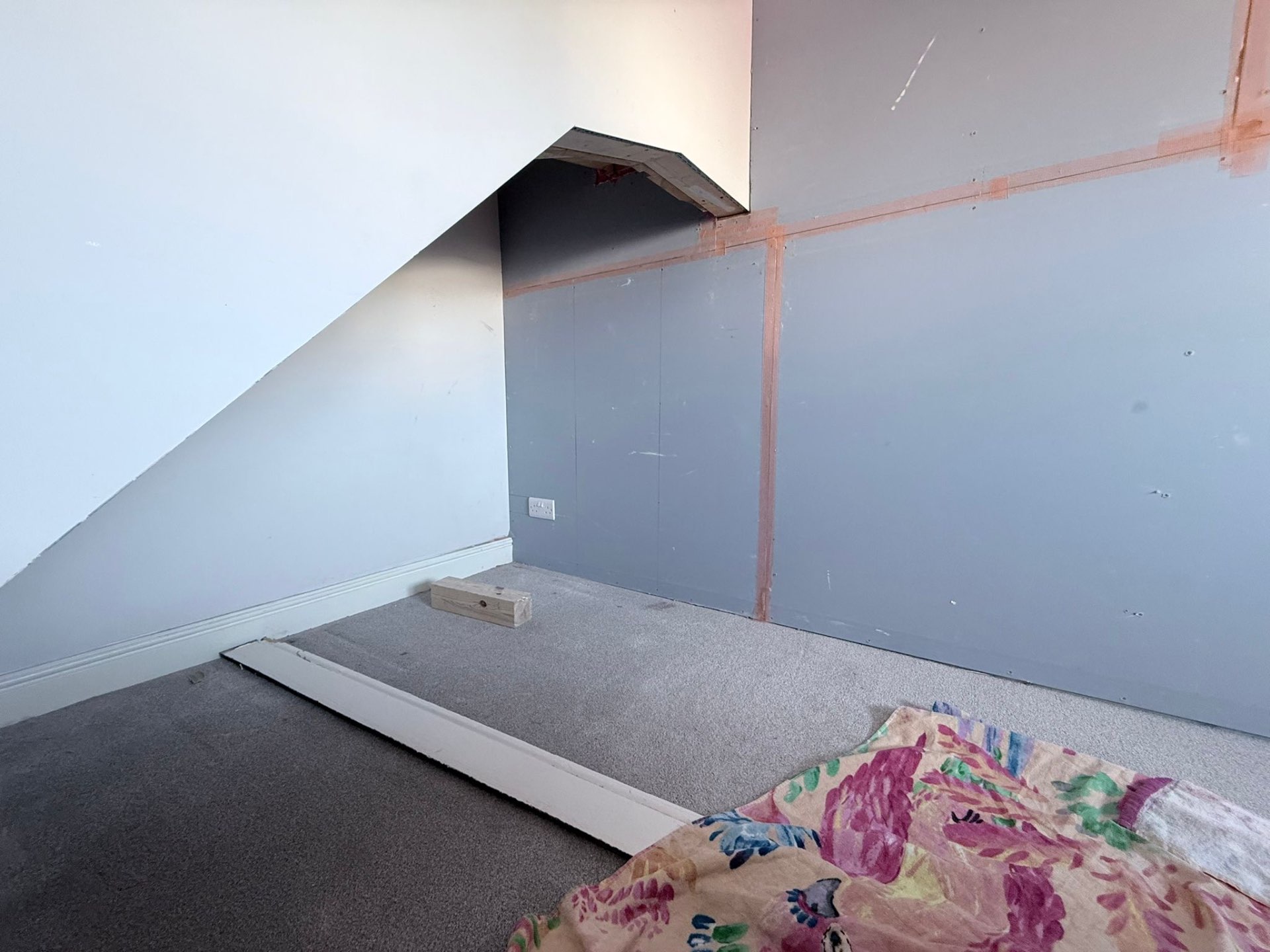
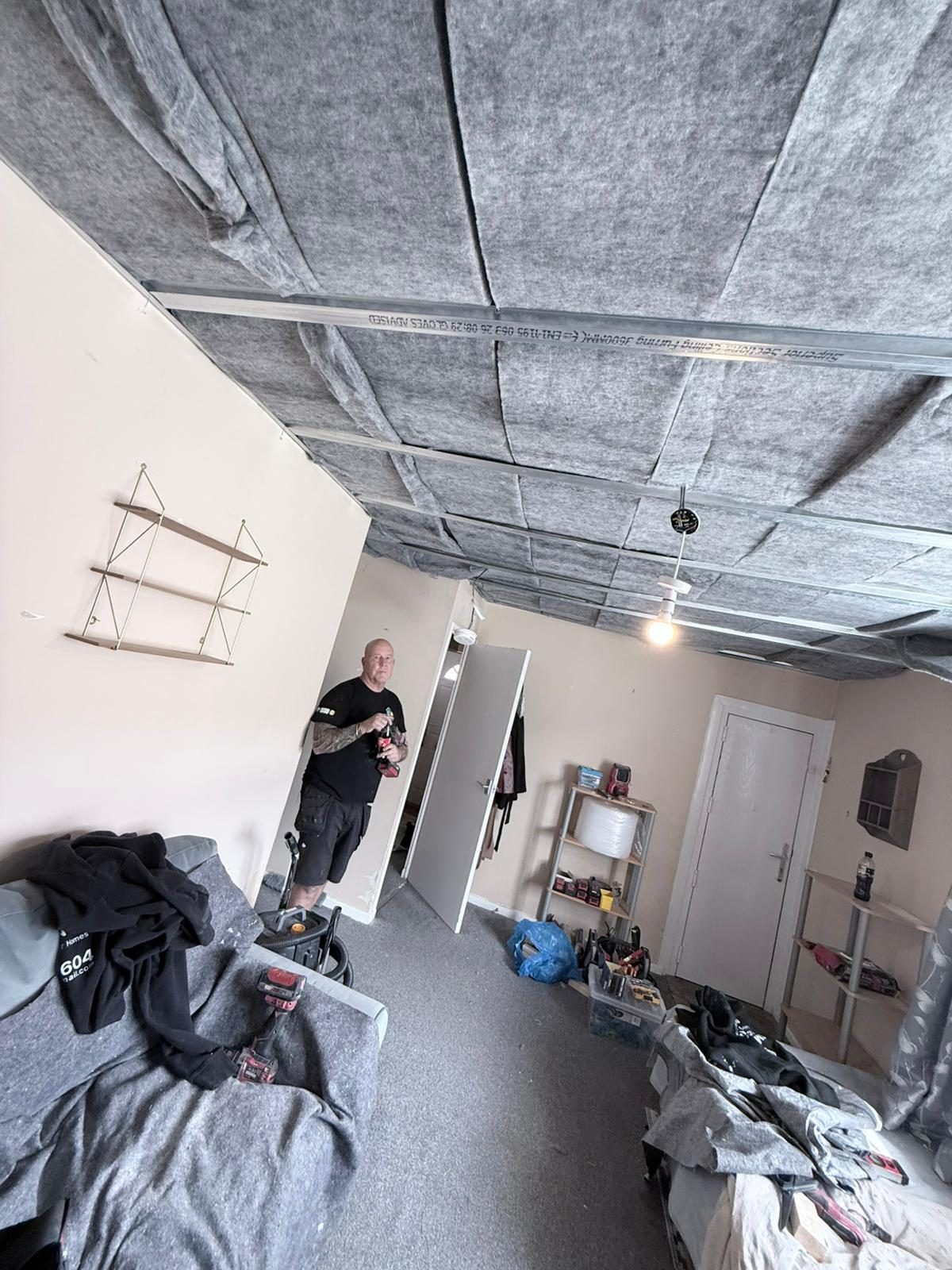
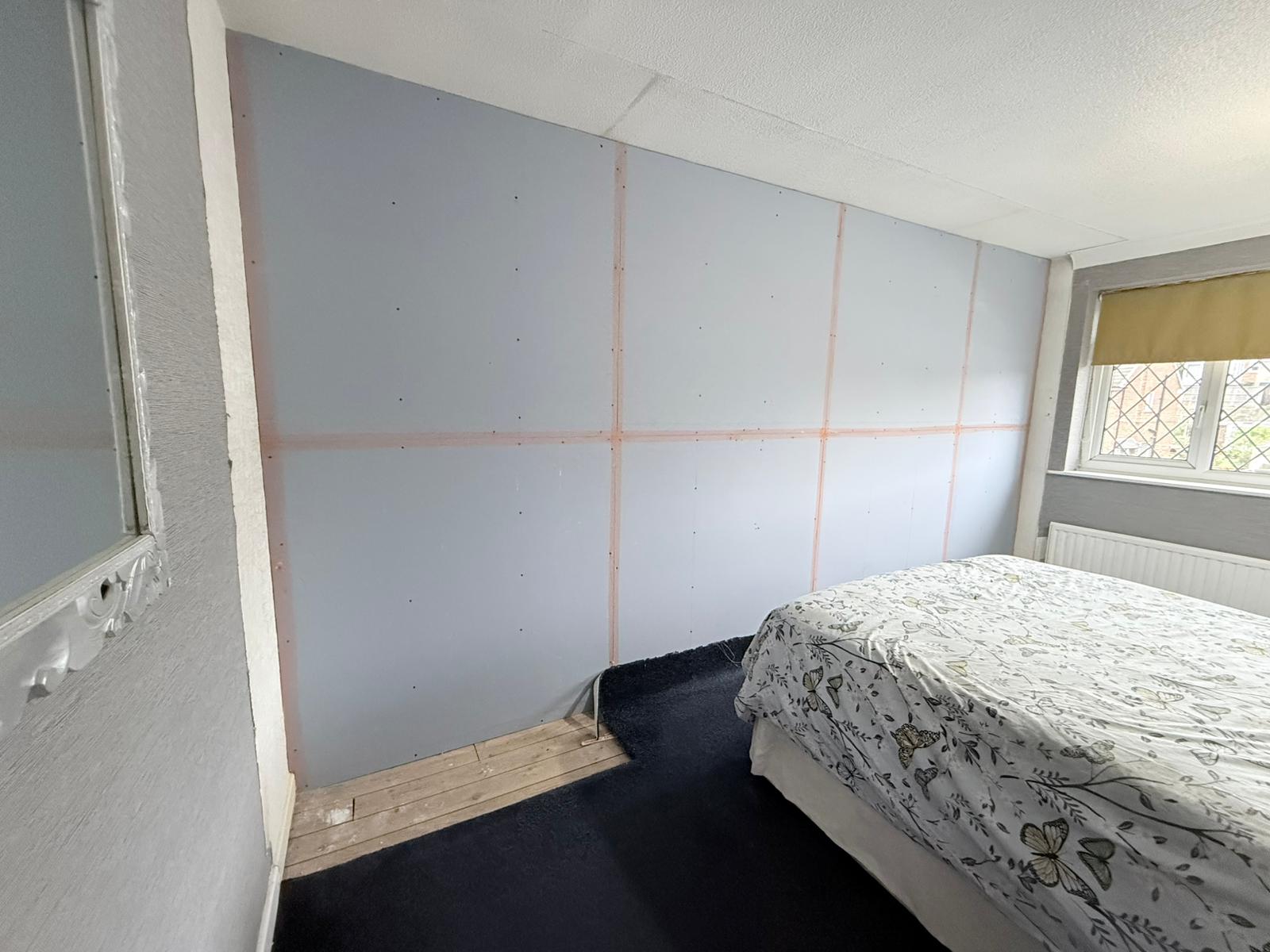
For party walls in Leeds and Wakefield terraces we build an independent stud wall a few millimetres clear of the existing brick. The new wall touches nothing it shouldn't. The cavity is packed with 60–80 kg/m³ acoustic mineral wool. Then two layers of 15 mm acoustic plasterboard go on, joints staggered, all perimeters sealed with acoustic mastic.
- Independent metal or timber studwork (no contact with brick)
- 60–80 kg/m³ acoustic mineral wool (Rockwool RWA45 or similar)
- Two layers of acoustic plasterboard, joints staggered
- Acoustic mastic at every perimeter and service penetration
- Resilient hanger or bar system where space is tight
What you actually feel in the room
Customers consistently describe a treated party wall as 'calmer' and 'further away'. Voices and TV drop from clearly intelligible to a muffled background. Bass and very low-frequency music are harder to control — we'll always be straight with you at survey about what's realistic for your specific neighbour problem.
How much room space you'll lose
A typical independent wall build-up is 70–100 mm thick depending on the performance target. In a 4 m wide Leeds bedroom that's about 8–10 cm of room width. We'll agree the exact build-up at survey based on the noise and how much depth you can afford to give up.
Frequently asked questions
- Will I still hear my neighbour after a soundproofed wall?
- You'll usually still know they're there — but at a level you can ignore. Loud TV becomes a muffled rumble; voices become unintelligible. We aim for 15–25 dB of airborne reduction, which subjectively feels like cutting the noise by half to two-thirds.
- Do I need my neighbour's permission to soundproof a party wall?
- Not for an independent wall built entirely inside your property — we're not touching the shared brick. The Party Wall Act only kicks in if works affect the structural party wall itself.
- How long does a soundproofed party wall take to install?
- A typical 4×4 m bedroom party wall is a 2–3 day job from strip-out to paint-ready finish. We work clean, dust-sheet everything, and skip-hire is included.
Next steps
Ready for a no-pressure technical survey?
We'll measure up, talk you through the options, and email a fully itemised quote — usually within 48 hours.